
A place to get curious about who you are, how you relate, and what might come next.
Individual and couples/relationship therapy with a focus on trauma and embodied experience. In person in Burlington and Middlebury, VT, and virtual throughout Vermont and Pennsylvania.
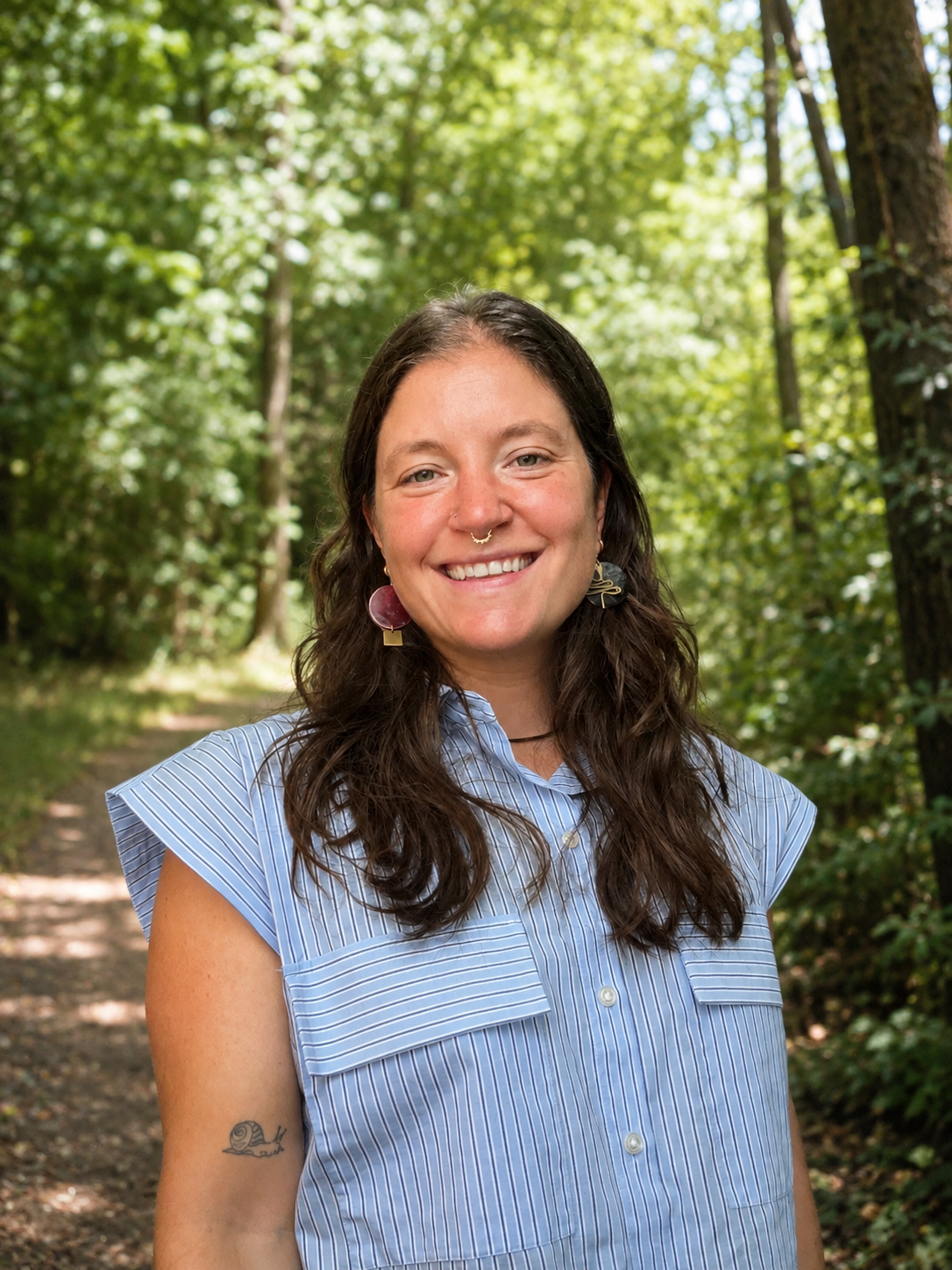
welcome!
I come to the work of therapy with deep curiosity about who we are and how we come to be in the world. My practice is grounded in psychodynamic and relational theory, with specialized training in Emotionally Focused Couples Therapy and Sensorimotor Psychotherapy. These approaches help us explore how past experiences become patterns in the present—within our thoughts and emotions, our bodies, and our relationships with others. Therapy offers a place not only to understand these patterns, but to experience and explore new ways of being. Our work will be collaborative, with a sturdy and trusting therapeutic relationship at its center.
I work with individuals and couples/relationships, including teens ages 14 and older and adults across the lifespan. As a clinical social worker, I approach therapy with attention to the relationships, systems, and dynamics of power that shape who we are and how we move through the world. This perspective is grounded in anti-oppressive practice and shaped by my experience in college counseling, restorative justice facilitation, partner violence intervention, and inclusive education. I am committed to providing affirming and inclusive care for LGBTQ+ clients.

-
Sometimes people come to therapy because something specific has happened, though often there is a more diffuse sense that something needs to change. You may feel stuck in a familiar pattern, find that something from the past continues to show up in the present, or simply want to understand yourself and your experience more deeply. I particularly enjoy longer-term work, where the relationship and continuity of therapy allow us to follow questions as they unfold, notice what emerges over time, and go places we may not have anticipated at the outset. There does not need to be a crisis, or even a clearly defined problem, to begin.
-
I welcome queer and non-monogamous relationships, as well as family members, friends, and other people looking to understand their relationships more deeply. Together, we can slow down and explore the patterns that emerge between you—what happens in moments of connection and disconnection, what each of you may be protecting or reaching for, and how your histories and embodied responses shape the relationship. From that understanding and experience, we can work toward new ways of relating, greater connection, or clarity about what comes next.
People may also come to relationship therapy at moments of decision or uncertainty. In these moments, our work may be less about moving toward a particular outcome and more about careful discernment and what different paths forward might mean.
-
I offer reflective and relational clinical supervision to social workers working towards licensure, and clinical consultation for independently licensed clinicians. I enjoy working with early-career clinicians finding their clinical voice, exploring how their own history is showing up in the therapeutic space, and figuring out how to show up clinically in a values-aligned way.
ways to work together
Finding the right therapist matters. I welcome you to reach out for an initial consultation to see whether working together might feel like a good fit.
Relationships and connection
I work with individuals, couples, and people in relationships who want to better understand the patterns that emerge in connection with others. This might mean exploring intimacy, conflict, disconnection, attachment, changing relationships, or the ways earlier experiences show up between you and the people you love.
Trauma, harm, and early experiences
Experiences of acute, developmental, and relational trauma can shape what we learn to expect from ourselves, other people, and the world around us. Our work might include exploration of experiences of sexual or relationship harm, difficult family relationships, or other experiences that continue to be felt in the present.
where we might begin
Identity, bodies, and belonging
Therapy might involve questions of identity or gender, your relationship with your body, the effects of diet culture and body judgment, or the experience of trying to find a way of being that feels more fully your own.
Life transitions
Some experiences disrupt the ways we have understood ourselves or imagined our lives unfolding, or offer unexpected changes. I work with people navigating young adulthood, fertility and reproductive experiences, changes in relationships or identity, and experiences within or after high-control groups, relationships, or belief systems. I also work with college athletes navigating injuries or adjusting to life after sports.
I am committed to ongoing learning within the field of psychotherapy. Listed here is a selection of education and trainings that have shaped my practice:
Bachelor of Arts, Middlebury College
Masters of Social Work, University of Pennsylvania
Emotionally Focused Couples Therapy, Philadelphia Center of EFT
Sensorimotor Psychotherapy, Level One for the Treatment of Trauma
Restorative Justice Facilitation Training, Ampersands Restorative Justice
Foundations of Clinical Supervision, Smith School of Social Work
education
details
fees and insurance
My fee is $160-$200 for 50-minute individual therapy sessions and $200 for couples and relationship therapy sessions. I am an out-of-network provider and do not bill insurance directly. If your plan includes out-of-network mental health benefits, I can provide a superbill for you to submit to your insurance company for possible reimbursement.
I recognize that the cost of therapy is an important consideration, particularly when considering longer-term work. I hold a limited number of reduced-fee spaces and encourage you to consider your broader access to resources—including income, generational wealth, property ownership, debt, and disposable income—when determining whether a reduced fee would make therapy more accessible to you. If cost may be a barrier, please feel free to reach out. I am happy to talk together about what might be sustainable.
good faith estimate
Under the No Surprises Act, clients who do not have insurance or who choose not to use their insurance have the right to receive a Good Faith Estimate of the expected cost of their care. This is intended to make the cost of therapy more transparent and help you understand what you can expect to pay before beginning services.
You can learn more about Good Faith Estimates and your rights under the No Surprises Act through the Centers for Medicare & Medicaid Services (CMS).
getting started
We’ll begin with a free consultation which is a chance to talk a little about what is bringing you to therapy and whether working together might feel like a good fit. You’re welcome to ask questions and get a sense of me and my approach, and I’ll share some initial thoughts about how I might support you. If it feels right to continue, we can talk about scheduling from there. You can book time with me here.